5 Key Tips for New Bluebonnet Teachers

Those time stamps are so ambitious they should run for office.

Have you found yourself becoming besties with the timer? Is timekeeper the most important student job in your class? Does your timer often beep in the middle of a lesson component? Perhaps your timer has met its tragic end after being thrown too many times?

I see the time stamps as a guide and not law. Depending on the day’s specific activities, I adjust to provide time where it’s most highly leveraged.

That novella labeled “concept development” is a vignette, not a script.

Do you feel like you’re in a middle school play rehearsal when you try to deliver a lesson using the questions from the teacher edition? Like you haven’t been trained in improv but here you are, performing, and the hecklers aren’t giving you any grace?

The concept development is supposed to be a window into a best-case-scenario lesson delivery…which is often not realistic. This is why that buzzword “internalization” is so important – because when you have deep content knowledge, you build your own script to adjust for your style and students’ needs. You anticipate pain points, plan around them, and adjust in-the-moment more easily because you’re the expert.

Each lesson component exists for a reason, and that reason isn’t to turn your hair gray prematurely.

This is the part you might not want to hear – I’m not an advocate for cutting out entire sections of the lesson. Adapting, modifying, Frankensteining? Absolutely. But everything is there, in a certain order, for a reason.

How much of each part you use (because maybe your kids don’t need as much “happy counting” or a dozen examples of multiplying a number by ten during fluency) is something that depends on the group of students you’re working with. Even the number of problems from the concept development may need modification.

You need to do the work yourself, like you’re one of your students. Yes, really.

This is likely the point where you start to think, hey lady, why are you suggesting so much work? I started reading this because I’m already putting too much time into this internalization thing.

Think of future you, teaching Bluebonnet a second year, with all of this stuff already done and ready to go, with a few notes you left yourself about what worked and what didn’t. Second-year you is gonna be so grateful that first-year you sucked it up and took care of business.

It’s such a flex to be able to say to a kid that you did the problems too – what can they complain about, then, if you’re willing to put in the work as well?

I know exactly which problems are likely to cause misconceptions, because I noted that while I worked. I select must do/may do problems for the problem set based on alignment with the exit ticket, which I complete before doing any other work for a lesson. And all of this makes choices regarding the lesson’s other components much more streamlined.

When the curriculum doesn’t work as-is, that shouldn’t mean more work for you. You’re not TEA’s unpaid intern.

Here’s where you get to read my one-woman rant about the concept development. Brace yourself. Winter is coming.

In what universe is it best practice for kids to do an entire lesson on white boards??? I would be so disheartened if I got asked to do a bunch of work during a professional development session and then was told to erase it.

Okay, so they need to be able to see what they’ve done – but I know you’ve seen firsthand how painfully slow some of our students write. Elementary students are still developing their fine motor skills. And drawing a rectangle? Equal parts? Oof, it’s painful. At least the curriculum includes templates sometimes, but often those aren’t enough or there’s just one because it’s meant for a dry-erase sleeve.

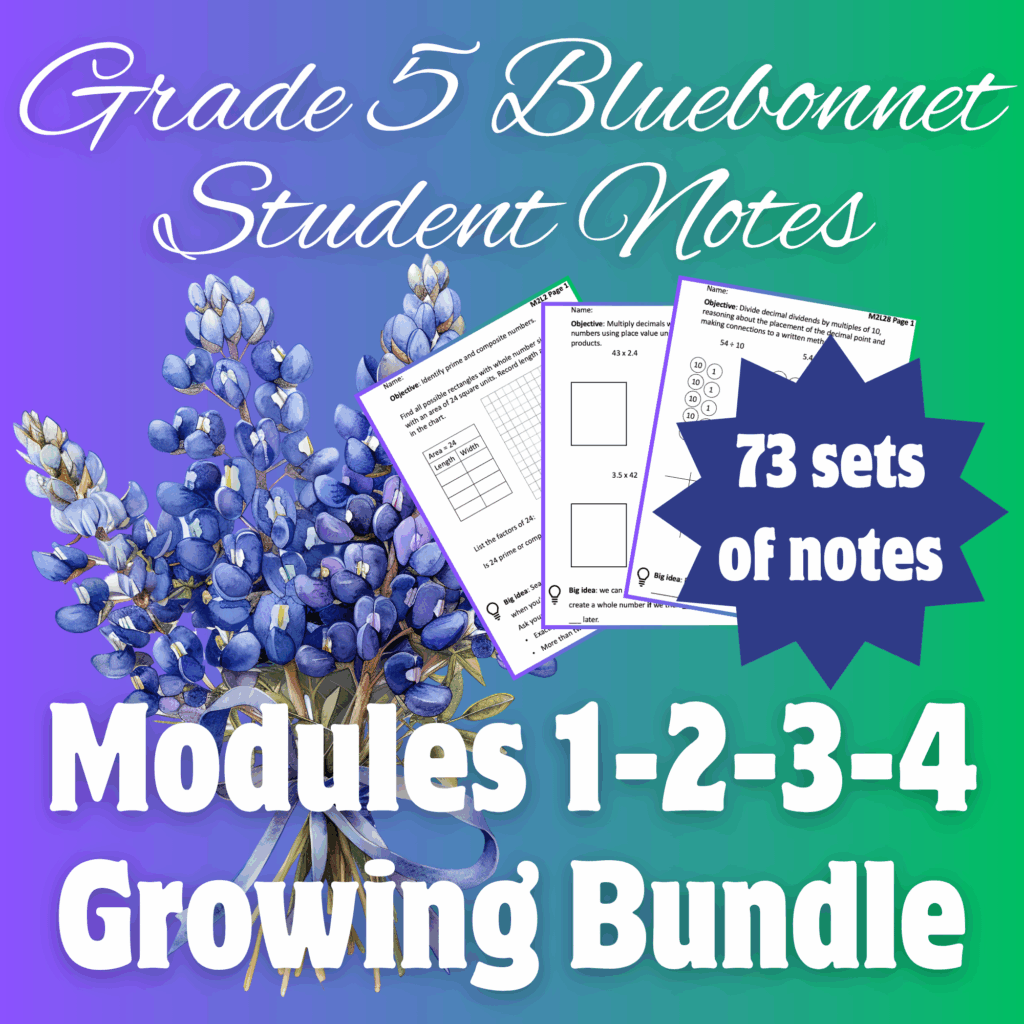
My solution was student notes – an outline of the lesson, with all concept development problems, including basic scaffolding such as place value charts, rectangles for strip diagrams and area models, and even special “big idea” fill-in-the-blank statements that provide opportunities to stamp concepts and key vocabulary. They’re formatted with space for work and a left margin left with space for hole-punching if your students live the binder life.

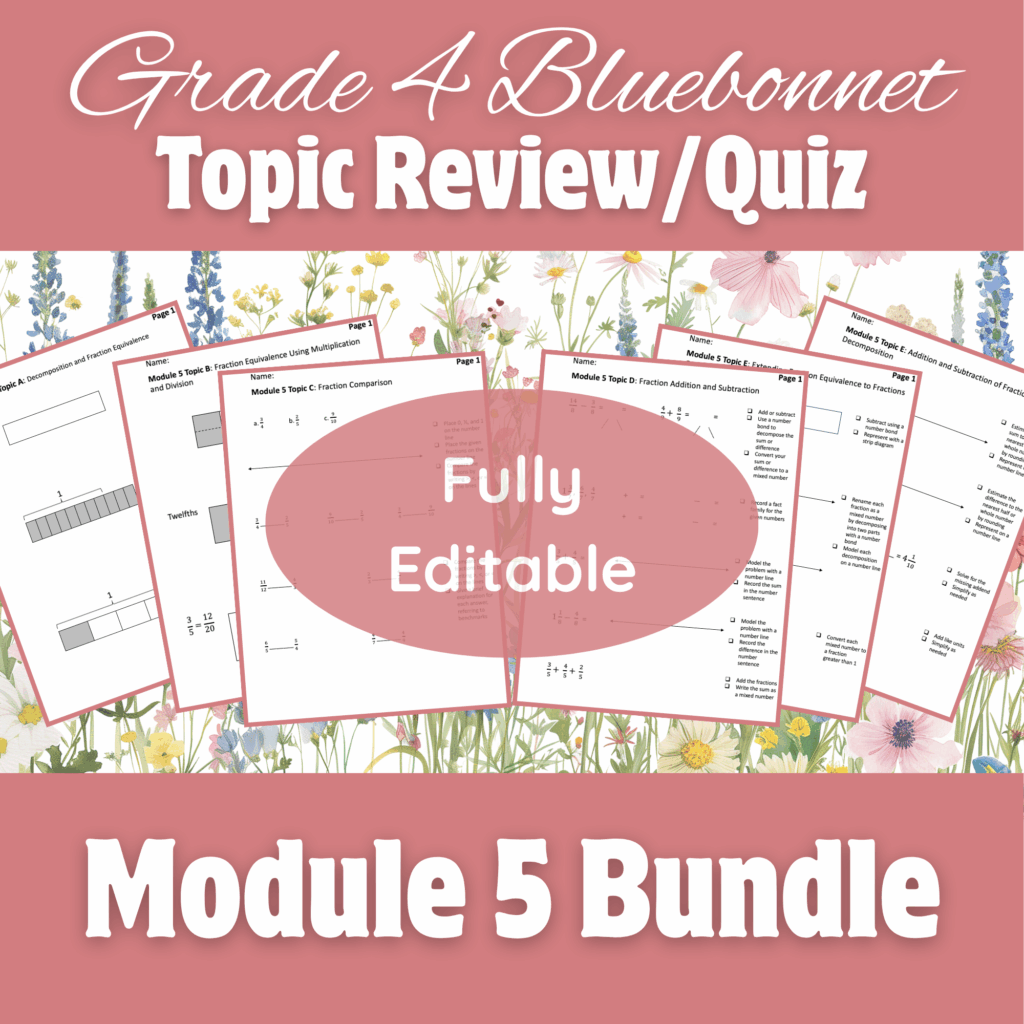
My notes are completely editable, so you can make a copy for the year and add/cut/modify as needed for this year’s kids. There’s even a key, so you don’t have to try to piece one together from the scattered examples in the Teacher Edition.

Check them out below!

join the email list

Keep in touch for new releases, updates, and freebies!

Receive my free resource about Student-Led Data Systems when you opt-in to my email list.